


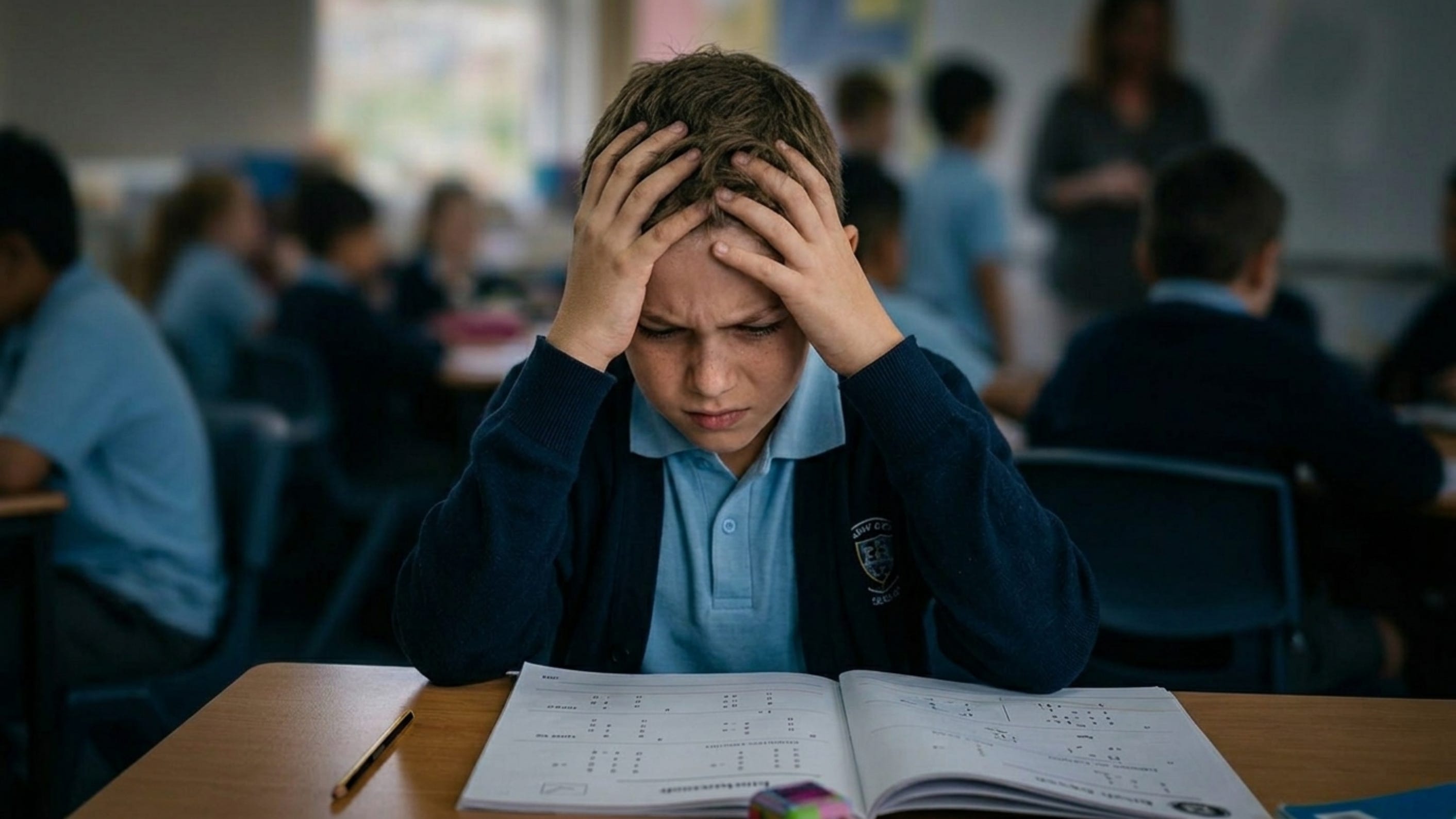
Our boys are in trouble, and the Federal Education Minister has finally noticed. Jason Clare recently announced a parliamentary inquiry that will focus on educational attainment and why boys are struggling at school. This is a welcome move by the Albanese Government, as education is the canary in the coal mine for boys and young men.
As my recent policy paper with the Page Research Centre shows, the problems start in school. As recent data shows, boys are falling behind in literacy indicators at school. Well over 30% of boys fail reading across Years 3, 7 and 9, and NAPLAN data shows boys are struggling in writing as well.
Recent analysis by the Kathleen Burrows Research Institute further shows that boys continue to fall behind in later years of school. Focusing on the New South Wales HSC results in 2023, the report shows that girls were found to be more likely to receive an ATAR of over 90 than boys. And despite being over 50% of NSW’s senior secondary population, only 48% of boys were awarded their HSC.
This gap between boys and girls continues into university. In 2024, over 61% of commencing students at Australia’s universities were women. Even in vocational training, the numbers are skewed towards women, who made up 54% of enrolments in the same year. The issue is systemic. The ABS Census in 2021 revealed that of the 30-year-olds who held at least a Bachelor degree, only 41% were men. For 25-year-olds, the percentage of men is slightly higher at 44%. For 22-year-olds, it drops again to 39%.
Click the button below to receive a complimentary one-month subscription of the ‘Our Civilisational Moment’ Substack.
This picture isn’t pretty. Boys are struggling at school. Young men are participating less in university education and vocational education than women. This educational inequality is likely leading to other inequalities and imbalances, both economically and socially. We are already seeing these inequalities start to play out.
The number of young men ‘Not in Employment, Education or Training’ (NEETs) has grown significantly over the past couple of decades. There are now well over 100,000 young men not working or engaging in education. The factors feeding into this trend are numerous, but one is likely to be related to perceived prospects for men.
Research from the e61 Institute shows that Australia’s economy is rapidly shifting in ways that are detrimental to employment prospects for young men. Four decades ago, men outnumbered women 3 to 1 in the biggest industry in Australia – manufacturing. Today, women outnumber men by the same factor, but this time it’s the caring sector that dominates.
This is compounded by the fact that wage growth has been predominantly in sectors of the economy where females are prevalent. Young men are, therefore, facing a double-barrelled problem: sectors where they traditionally find work are both shrinking and paying less in real terms. No wonder young men are struggling to engage.
If the fact that increasing numbers of young men are failing to get educated and engage in the economy wasn’t already grim enough, the social milieu adds another layer of complexity. Young men live in a society where masculinity is often viewed negatively. Traditional masculine norms are under considerable cultural pressure as different societal and cultural expectations emerge, creating social stigma.
That social stigma is driving men to seek community and understanding online. The rise of the ‘man-o-sphere’ and online influencers is a significant phenomenon of recent years that has led to growing criticism of modern social norms like feminism and egalitarianism. Young men feel simultaneously ostracised from, and hostile towards, our society.
This division between young men and the rest of society will only hasten trends that are already undermining social cohesion. Fewer people are getting married, fewer people are having children, and people are waiting longer than ever to begin family formation. In other words, young men are increasingly failing to leave home, find a wife, and have children.
In sum, young men are in crisis. They are falling behind at school, disengaging from the economy, and failing to attain basic social milestones like starting a family. Fewer marriages means lower fertility. Fewer workers means less economic activity and decreasing tax receipts. We are looking at a crisis with political, social, and economic ramifications.
This is why it is good to see the Education Minister initiating a parliamentary inquiry into educational attainment. Boys are clearly struggling. What needs further investigation and action is the fact that those boys grow to be men who are struggling. And those struggling men will be a drag on Australia’s economy and social cohesion.
We need to learn more about this problem and take effective actions at community and government levels. I have made a start in a my policy paper with the Page Research Centre. The federal government should consider widening the education inquiry, or else initiate a separate inquiry into the plight of young men more broadly.
As we discuss and act on this issue, we must be careful not to pathologise the crisis. Our young men need our help and encouragement, rather than our condemnation. They already have enough of the latter.
Simon P. Kennedy is a Senior Research Fellow at Alphacrucis University College, and a Senior Research Fellow at the University of Queensland. He is also a Non-resident Fellow at the Danube Institute. This article is based on a policy paper published through the Page Research Centre.