



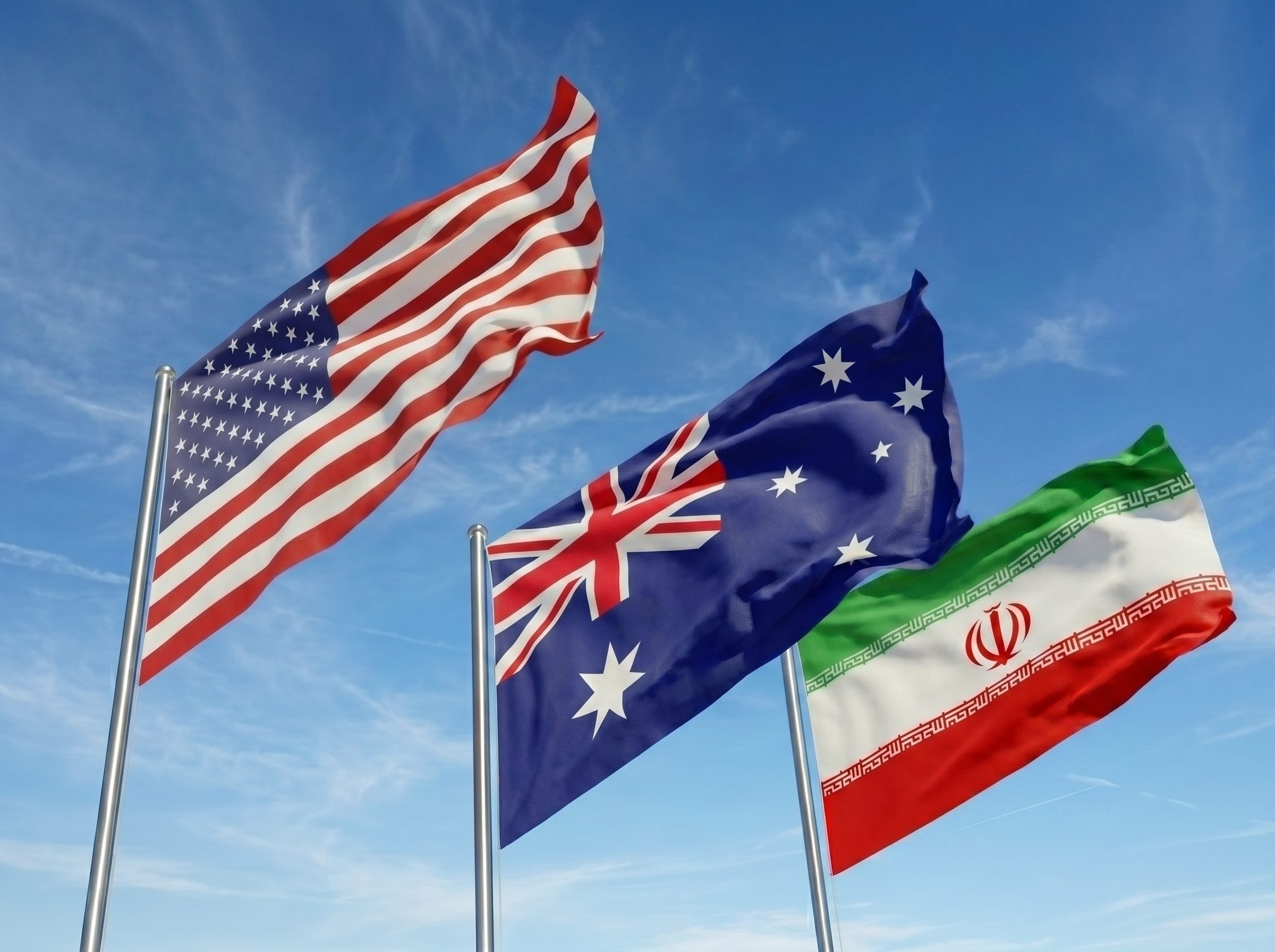
When Donald Trump assumed office for the second time on January 20, 2025, I have it on good authority that he surveyed the list of over thirty formal American allies to assess their worthiness according to whether they were a net benefit for the advancement of American security. Israel, some countries in the Middle East, the Baltic states, and perhaps Japan were identified as those able or willing to pull their weight. Most were marked down as free-riders or shirkers.
Click the button below to receive a complimentary one-month subscription of the ‘Our Civilisational Moment’ Substack.
Iran and the Straits of Hormuz
This brings us to the current situation in Iran and the Straits of Hormuz in particular. It is true that Trump initiated an attack without consulting any allies except for Israel. It is also probably true that he underestimated the resilience of the Iranian regime even if his confidence that the US will overwhelmingly win the military contest was correct.
To be fair to Trump, had he consulted far flung allies before any hostilities, the latter would have most likely disagreed with any American and Israeli intention to attack Iran. Information leaks might have also meant the precious element of surprise might well have been lost. For these reasons and determined to ensure the Iranian regime cannot develop nuclear weapons, the attack occurred.
Leaders of so-called middle powers, such as Anthony Albanese, argue that international law should not be disregarded lightly. And the American/Israeli attack against Iran is of questionable legality. Even so, even Australia must admit that it is a dangerous fantasy to rely too heavily on law in international politics. After all, Iran’s four-decade old nuclear program is an illicit and probably illegal one yet international law was powerless to stop it. International law was silent on Iran conducting terrorist activities around the world and funding proxies such as Hezbollah and Hamas to do the same. Twentieth century international law has not evolved to address major threats to states and societies.
The point is that every American ally would view the Iranian possession of a nuclear weapon as a catastrophic strategic development, and for countries such as Israel, an existential one. Up to 2024, Iran was the world’s foremost sponsor of state and non-state terrorism. The current American and Israeli actions against Iran have severely dented Tehran’s nuclear and terrorist sponsoring activities.
Allies complain that the US under his administration has become unreliable. Trump now justifiably makes that same charge about us. Trump 2.0 has used force against what American allies would agree are terrorist entities and targets in Gaza, Lebanon, Syria, Iraq, Yemen, Somalia, Nigeria, and of course Iran. The regime in Venezuela under Nicolas Maduro was no friend of America’s allies. In other words, countries declaring the inviolability of international law nevertheless depend on America to push or break these same laws to protect them from nefarious and pariah entities with little or non-existent regard for international law.
Facing Reality on Australia’s Security
The current instability in the Straits of Hormuz is a direct result of the war against Iran. Even if one disagrees with the initial American/Israeli martial action, all American allies still have a deep self interest in preventing Iran from using the Straits of Hormuz to hold the global economy to ransom. This is the context for Trump recently giving European and Asian allies, including Australia, a serve for sitting on the sidelines rather than assisting the United States to protect shipping transiting through the Straits of Hormuz.
Let’s focus on Australia. Some commentators such as former Prime Minister Paul Keating argue we are over reliant on America and too compliant. It is true that our treaty with America does not guarantee that it will come to our defence – just as we are clearly not legally bound to join it in any war. However, the most reliable currency in international politics is not legal obligation but national and geopolitical interest. The more important and integral we are to American regional and global objectives, the higher the likelihood the US will come to our aid.
The determination to assist a junior ally is unavoidably a subjective one. Like Joe Biden, Barack Obama and George W Bush, Donald Trump will make the same kind of calculation even if they will have different thresholds of when the US ought to render assistance. What is clear is that Australia sitting on the sidelines and pursuing a far more independent posture based on minimal (or non-existing) commitments to America will leave us more vulnerable.
This is the case for several reasons. It greatly diminishes the prospects of America coming to our defence and creates greater licence for countries like China to issue ever more serious threats against us. A similar logic applies to assessments of when and whether American extended nuclear deterrence covers weapons of mass destruction attacks against Australia.
Moreover, and as a response to those moving away from an integrated military-industrial-technological base with America, doing that will severely limit what hard power we can develop or acquire for ourselves. It leads to greater impotence and isolation in strategic terms because a diminution in national hard power and lack of alignment with great powers such as America will make us less relevant and more exposed in a region which pays homage to hard power.
Keeping the Alliance Strong
In our region, the evidence is that much of East Asia doesn’t operate according to heroic or charitable principles. When China was imposing economically coercive measures against Australia, almost every neighbour was silent. The few advocating for our cause included the US and Japan. Intimidating Chinese actions against Philippine ships in the South China Sea are now commonplace. These same two countries have stood by Manila while South-East Asian neighbours, and ASEAN as an organisation, remain tight-lipped. In a world defined by hard power, would a more independent but less capable Australia really enhance our security or improve our ability to behave as a creative middle power in the region?
Inevitably, the sovereign decision to ask and receive more from the US will mean the latter might ask more from us. But this is no different from any meaningful alliance in history. The alternative is to bear the immediate and longer-term risks and costs to Australia of walking back the alliance or opting out altogether.
This leads us back to the Straits of Hormuz. As the late and legendary American Secretary of State Richard Armitage said about allies, they “bleed for each other.” Armitage was an old-fashioned Republican internationalist which is the kind many allies yearn for. But Trump didn’t ask allies to join it in the bombing campaign against Iran. He did ask for assistance in stabilizing the Straits of Hormuz.
Alliances are not social gatherings but necessarily transactional and underpinned by common interest. Few allies heeded the call even thought they have a common interest in shipping passing safely through the Straits of Hormuz. If we didn’t heed the call of America asking for assistance in a relatively safe undertaking, why do we expect America will respond in our time of need?
Dr. John Lee is a senior fellow at the Hudson Institute in Washington DC. From 2016-18, he was senior adviser to the Australian Foreign Minister.
.