



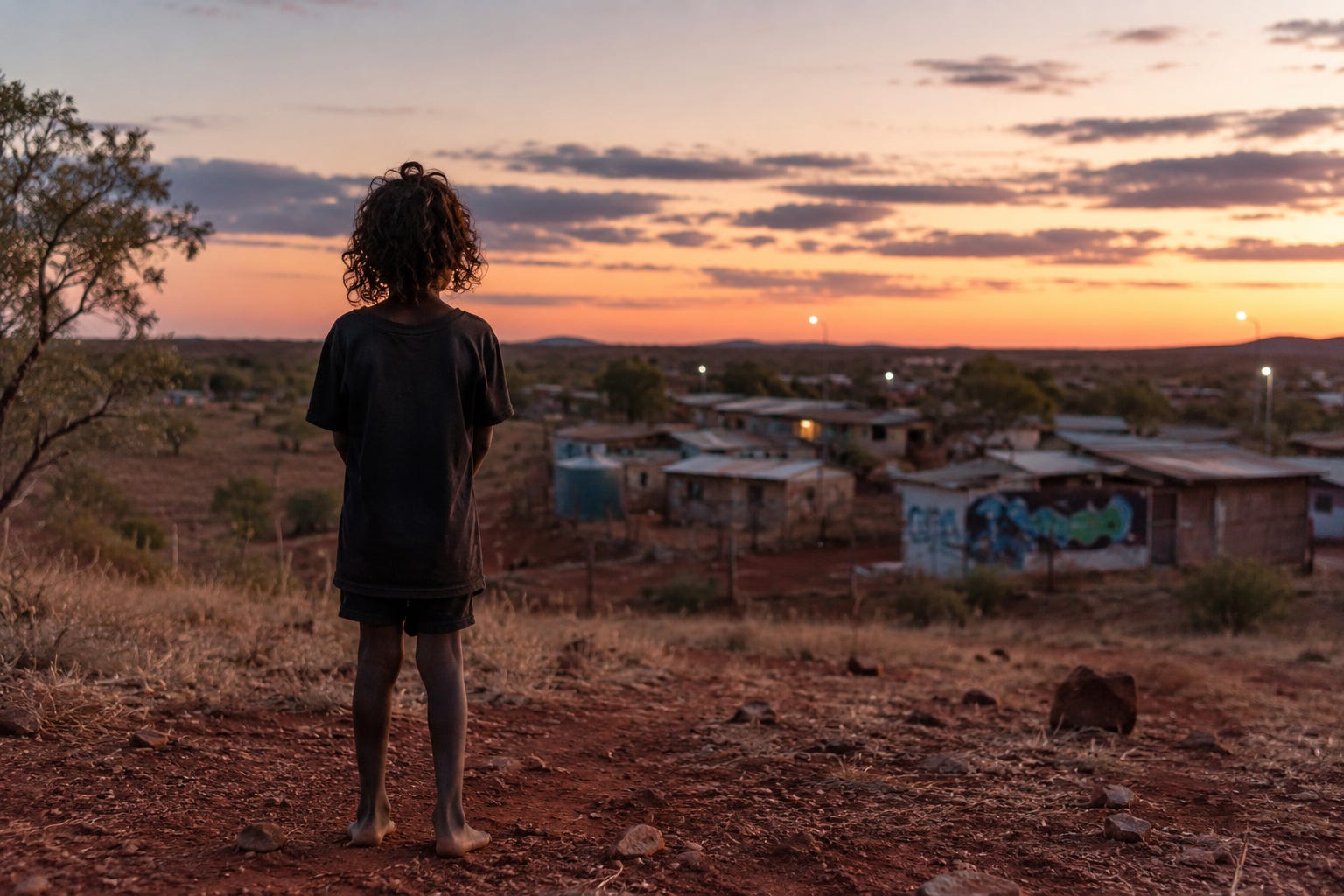
Yes, there has been a tragedy—the recent loss of an innocent five-year-old Aboriginal girl in Alice Springs. Is the fact that she is Aboriginal relevant? Shouldn’t it just matter that she was an Australian girl? Well, her cultural heritage is relevant here because it is well documented that Aboriginal children are more likely to be neglected, abused, and live in unsafe environments, than other children. Since this tragic case, we have already heard of more allegations of neglect. Last week, The Australian told the story of how an Aboriginal boy was ordered by the court to be removed from his (non-Aboriginal) carer and returned to remote Northern Territory community, where there are serious concerns about the boy’s safety, should he be returned to that community. This is despite claims that the boy wished to remain with the carer.
I do not wish to sensationalise or politicalise this recent tragedy. And while I can’t control people’s reactions to what they read here, I hope this article doesn’t become an opportunity for those living in echo chambers to engage in a pile-on, where they complain about every problem associated with Aboriginal Australia. For such people, I am not saying your complaints or criticisms are not valid, only that they are far too often misplaced.
Rather, in this article I discuss a problem that has been around for as long as I can remember, and one I believe was a significant contributor to the death of this little Aboriginal girl and many other hardships endured by Aboriginal people. Address this problem properly and we will begin to see the gap close. I am talking about the idea of ‘self-determination.’
Click the button below to receive a complimentary one-month subscription of the ‘Our Civilisational Moment’ Substack.